
Annus Mirabilis
Larkin about

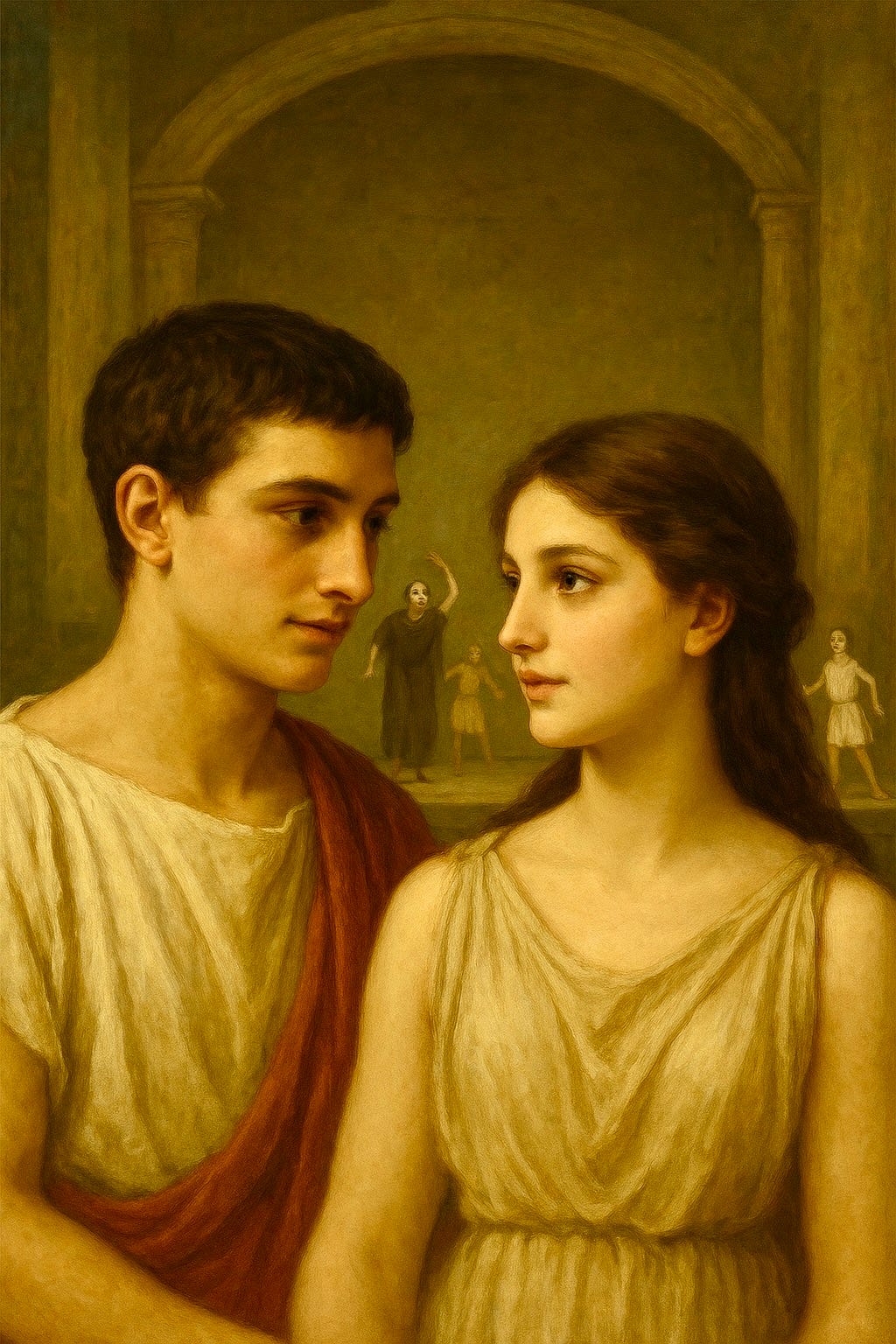
Catullus in Love, 63 BC
Philip Larkin’s best known poem after ‘This be the verse’ (“They fuck you up, your mum and dad”) is probably his ‘Annus Mirabilis’, the first verse of which runs:
Sexual intercourse began
In nineteen sixty-three
(which was rather late for me) -
Between the end of the Chatterley ban
And the Beatles' first LP.

Here is Larkin himself reading it:You can hear him read all four stanzas of the poem on Youtube. I was asked - or challenged - to translate the first stanza into Latin. This is an activity I call "Larkin about": to translate into Latin, one must find a suitable ancient date and context. 63 BC was the year that Cicero, as consul, with his co-consul Gaius Antonius Hybrida, thwarted Catiline's conspiracy to overthrow the Roman Republic. (Romans didn't know it was 63 BC: they called it "the year when Cicero and Hybrida were consuls"). It was also around the time the young poet Catullus had fallen in love with 'Lesbia', was producing his earliest love poems, and was evidently also composing some theatrical mimes (now lost). Catullus was part of a group of competitive young poets called the novi poetae - the 'new wave'. He and his friend Licinius Calvus exchanged witty verses in various metres. Calvus' poems are lost, so I translate "Annus Mirabilis" into the kind of elegiacs that might have been written by Calvus, translated as: Sexual intercourse began In 63 BC (which was rather late for me) - Between the end of the Catiline plot And Catullus' first whoopee.
In Latin elegiac verse:

𝑐𝑜𝑛𝑠𝑢𝑙𝑖𝑏𝑢𝑠 𝐶𝑖𝑐𝑒𝑟𝑜𝑛𝑒 𝐻𝑦𝑏𝑟𝑖𝑑𝑎𝑞𝑢𝑒 𝐶𝑢𝑝𝑖𝑑𝑖𝑛𝑖𝑠 𝑎𝑟𝑑𝑜𝑟
   𝑢𝑛𝑑𝑖𝑞𝑢𝑒 𝑠𝑢𝑟𝑟𝑒𝑥𝑖𝑡 (𝑠𝑎𝑡 𝑚𝑖ℎ𝑖 𝑠𝑒𝑟𝑢𝑠 𝑒𝑟𝑎𝑡)
𝑖𝑛𝑠𝑖𝑑𝑖𝑎𝑠 𝑖𝑛𝑡𝑒𝑟𝑓𝑜𝑒𝑑𝑎𝑠 𝑡𝑢𝑟𝑝𝑖𝑠 𝐶𝑎𝑡𝑖𝑙𝑖𝑛𝑎𝑒
   𝑒𝑡 𝑚𝑖𝑚𝑜𝑠 ℎ𝑖𝑙𝑎𝑟𝑜𝑠, 𝑑𝑜𝑐𝑡𝑒 𝐶𝑎𝑡𝑢𝑙𝑙𝑒, 𝑡𝑢𝑜𝑠.
Literally this means:

When Cicero and Hybrida were consuls Cupid's flame
arose everywere (it was rather late for me)
between the dastardly plots of depraved Catiline
and your witty mimes, learned Catullus.

The name Hybrida is here pronounced (permissibly) with short y. In two surviving Latin poems, however, it's found with a long first syllable, so let's suppose a different version with long y was the work of another elegiac novus poeta, Catullus' friend and rival Helvius Cinna:

𝑠𝑢𝑎𝑣𝑖𝑠 𝑜𝑝𝑢𝑠 𝑉𝑒𝑛𝑒𝑟𝑖𝑠 𝑡𝑢𝑚 𝑝𝑟𝑖𝑚𝑢𝑚 𝑖𝑛𝑐𝑒𝑝𝑖𝑡 𝑒𝑡 𝑎𝑟𝑑𝑜𝑟
      𝐻𝑦𝑏𝑟𝑖𝑑𝑎 𝑐𝑢𝑚 𝑐𝑜𝑛𝑠𝑢𝑙 𝑐𝑢𝑚 𝐶𝑖𝑐𝑒𝑟𝑜𝑛𝑒 𝑓𝑢𝑖𝑡.
𝐻𝑒𝑢 𝑚𝑖ℎ𝑖 𝑠𝑒𝑟𝑖𝑢𝑠 𝑒𝑠𝑡 - 𝑖𝑛𝑡𝑒𝑟 𝑐𝑎𝑠𝑢𝑠 𝐶𝑎𝑡𝑖𝑙𝑖𝑛𝑎𝑒
    𝑔𝑎𝑢𝑑𝑖𝑎𝑞𝑢𝑒 𝑖𝑛 𝑙𝑒𝑐𝑡𝑜, care 𝐶𝑎𝑡𝑢𝑙𝑙𝑒, 𝑡𝑢𝑎.
The work of sweet Venus and her flame first began
when Hybrida was consul with Cicero.
Alas, rather late for me - between the Catiline affair
and your pleasures in bed, dear Catullus.
Splendid!
Enjoyed this as usual 😀