
Lightning in a clear sky!
The shifting fate of human beings

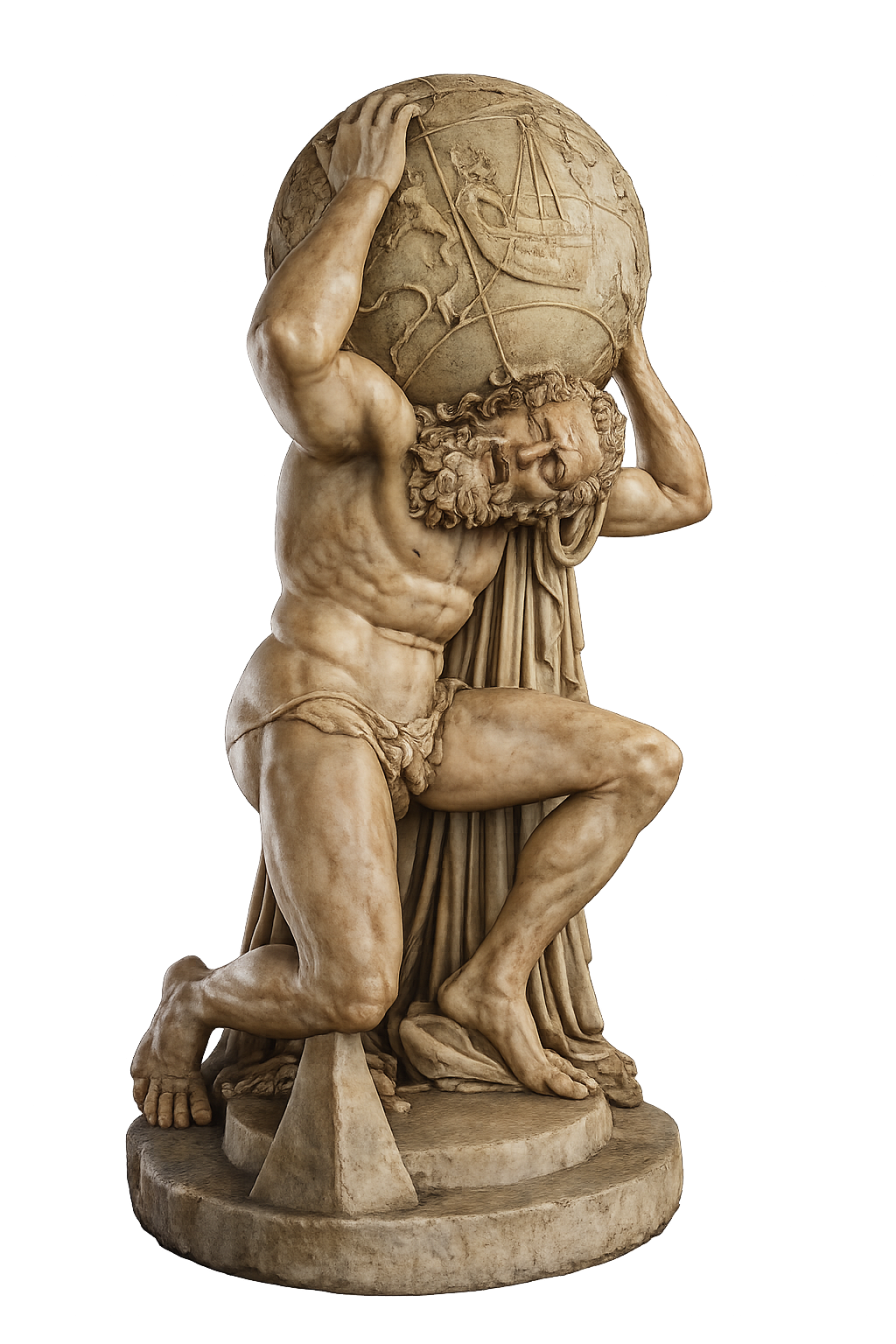
The Farnese Atlas, c. AD 150, Naples Archaeological Museum
Keir Starmer’s recent resignation to make way for Andy Burnham reminded me of a witty ode by Horace (Odes 1.34, which I translate and read below) that ends with the image of Fate capriciously “snatching the crown from one man’s head and placing it on another’s”.
In the ode Horace takes a side-swipe at his favoured philosophy of Epicureanism, which teaches that the universe is wholly material (made of atoms). Rather than, say, supposing that thunderbolts indicate the anger of Jupiter, Epicureanism held that such phenomena are explicable in purely physical terms such as clouds clashing together.
What, then, if lightning and thunder occur in a cloudless sky?
Horace mock-solemnly suggests that, having witnessed just that, he’s now bound to return to traditional religious beliefs. He sketches how Jove’s fearsome thunderbolt penetrates even Hades (the notion of the Underworld was also dismissed by Epicureans) and the ends of the cosmos supported by Atlas (a mythical giant).
The final moral of the ode, that Fate swaps people’s fates around in an instant, does not obviously follow from these considerations. But perhaps an unusual natural phenomenon such as Horace has witnessed might serve to make one more keenly aware of the sudden mutability of human life.
A rare and intermittent worshipper
of gods, I’ve strayed, a keen adherent to
  perverse philosophy. Now I am forced
   to turn my sails around and trace the route

I sailed before, because Lord Jupiter,			5
who as a rule divides with fiery lightning
   the clouds asunder, now through cloudless sky
    has launched his chariot, swift with thundering steeds,

and churned up solid earth and winding streams,
  making the Styx and the macabre realms 			10
  of loathsome Hadês, and the world’s outer rim
   shouldered by Atlas, shake.   God has the power

to swap round low and high, reduce the proud
and raise the humble high. Capricious Fate
  delights in placing, with a strident laugh,			15
    one person’s crown upon another’s head.
parcus deorum cultor et infrequens,
insanientis dum sapientiae
  consultus erro, nunc retrorsum
   vela dare atque iterare cursus

cogor relectos: namque Diespiter,			5
igni corusco nubila dividens
  plerumque, per purum tonantis
   egit equos volucremque currum

quo bruta tellus et vaga flumina,
quo Styx et invisi horrida Taenari			10
  sedes Atlanteusque finis
   concutitur. valet ima summis

mutare et insignem attenuat deus
obscura promens. hinc apicem rapax
  Fortuna cum stridore acuto				15
   sustulit, hic posuisse gaudet.
Enjoyed this anecdote, which would have made a good koan. I’ll stick to OK via Fitzgerald:
Myself when young did eagerly frequent
Doctor and Saint, and heard great Argument About it and about: but evermore Came out by the same Door as in I went.
Υπάρχει μία λέξη για αυτό το σάμπστακ. Εξαιρετικό. Ιώναθαν Χάντφιλντ.