
The Emperor's New Clothes
Cavafy on Komnenos's piety

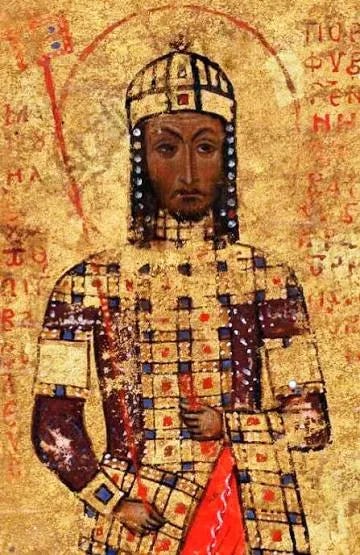
In this short poem Cavy muses on how Emperor Manuel Komnenos (1118-80) called for humble religious clothing when he thought death was imminent. Dying in monastic attire was a Byzantine custom, believed to wash away one’s sins of pride and impiety (the historian Niketas Choniates notes that the opulent Manuel had to find a spare cloak since none was on hand). Paid astrologers are set against pious vestments as Manuel’s hedges against death, and the poem closes with a subtly ironic comment on the consolation of faith.
I translate, and read, in Cavafy’s chosen rhythm, iambic pentameters.
The Emperor Lord Manuel Komnenos,
one melancholy dull September day,
sensed that his death was nigh. The fortune-tellers
(well bribed) within his Court began to babble
about how many years he’d go on living.
But even as they spoke, the king himself,
recalling old traditions of devotion,
instructed that from the monastic cells
ecclesiastical attire be brought;
he put it on, delighted to assume
the humble likeness of a priest or monk.

How fortunate are all who have belief,
and like the Emperor Manuel end their days
dressed in the humble garments of their faith.


Ο βασιλεύς κυρ Μανουήλ ο Κομνηνός
μια μέρα μελαγχολική του Σεπτεμβρίου
αισθάνθηκε τον θάνατο κοντά. Οι αστρολόγοι
(οι πληρωμένοι) της αυλής εφλυαρούσαν
που άλλα πολλά χρόνια θα ζήσει ακόμη.
Ενώ όμως έλεγαν αυτοί, εκείνος
παληές συνήθειες ευλαβείς θυμάται,
κι απ’ τα κελλιά των μοναχών προστάζει
ενδύματα εκκλησιαστικά να φέρουν,
και τα φορεί, κ’ ευφραίνεται που δείχνει
όψι σεμνήν ιερέως ή καλογήρου.

Ευτυχισμένοι όλοι που πιστεύουν,
και σαν τον βασιλέα κυρ Μανουήλ τελειώνουν
ντυμένοι μες στην πίστι των σεμνότατα.